
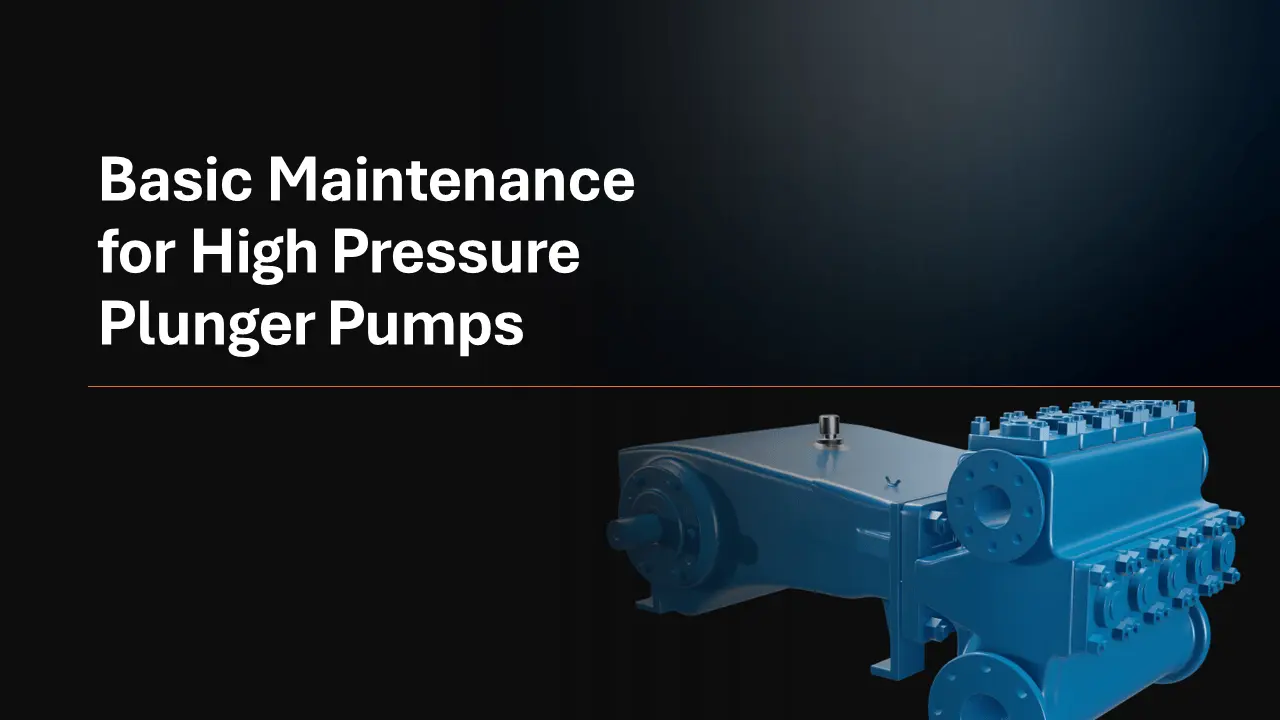
This article is meant to provide an overview of basic maintenance in high pressure plunger pump applications for industrial use. This article will only touch the tip of the maintenance structure and should be used only as a baseline for maintenance.
Basic Maintenance for High Pressure Plunger Pumps
Proper training before attempting a repair is imperative. Most pump OEM manufacturers offer technical training programs to authorized distributors or dealers. These programs range from one to five days in length. These are sometimes free of charge. It is strongly recommended that you take advantage of programs like these if attempting to repair or refurbish pumps.
The two most common failures seen are:
- Lack of normal maintenance: No oil changes, running with water in the oil, valve seat o-ring damaged (resulting in loss of pressure and pulsation's), running with leaking or worn packings and or broken plungers. All of which can destroy the pump.
- Poor inlet conditions leading to cavitation, dry running, poor filtration or the wrong filtration used. All of which lead to premature packing, valve and plunger damage.
Maintenance is not only changing oil; it is servicing all aspects of the pump, from the water supply to the discharge nozzle.
And when referring to pump maintenance, it is not just referring to the pump itself, but to all the components.
Lets start with the pump.
Regular System Maintenance for Pumps
The first place to start is by assembling a checklist. This list should include sections covering all the vital components of the equipment: Fluid system, pump, engine or motor, burner, and more. Use the checklist as a visual inspection. Most equipment manufacturers have this list available.
Example:
Daily Inspection (i.e. cold water). Start with the inlet side.
Water Supply: Look for leaks, clean the filter, and make sure there is adequate flow.
Pump: Look for water leaks around the pump and check the oil for proper level and make sure there is no water in the oil.
Engine: Check the oil level, gas, air filter if clean.
Drive System: For Pulley Drive Systems, ensure that the belts have proper tension, that the pulleys are secure, and that any belt guards are properly secured. If you have a Direct Drive System (gas/diesel, electric, hydraulic), ensure the mounting bolts are tight and that any gear box has proper oil level.
Hose: Is it in good shape, fitting/connections tight.
Spray Gun: Proper size for the system, connected properly.
Lance: Guard in place (secure), good condition.
Nozzle: In place, proper size.
Now start and test the system under pressure look for leaks. Ensure the entire drive system is functioning properly with adequate pressur. Check for excessive vibration, and overall effective operation.
The above list is only a sample. Most equipment manufacturers have specific checklists and they will vary depending on the type of washer you have.
Preventative Maintenance for Pumps
The next list you should assemble is your preventative maintenance list. This should include scheduled oil changes (pump and engine), belt inspection, packing and valve changes, and more.
In general, pump manufacturers agree that the oil should be changed after the first 50 hours of operation and then every 500 hours or three months, whichever comes first. If the equipment is used in very sever conditions the oil may have to be changed sooner.
But what oil should I use?
Each pump manufacturer offers their own special oil and recommends that you use it with their product. They have done extensive testing to find the best oil that performs with their pump.
The pump internals also have a limited life. Packings, brass retainers and intermediate ring guides, valves and plungers are wear items. It can be handled in two ways:
First you can contact the manufacturer and they can give you an estimated life (under their test conditions) and you can look at replacing the components around that time frame.
Or you can do the second option and run it until it breaks. The first option is preferred because you will save time and money doing a controlled repair at your leisure instead of in the middle of a job. It's generally best practice to use original equipment parts. The life of these parts is also dependent on how the pump is being used and what is being run through it. Hard water, chemicals, by-pass time, freezing, over heating and filtration are a few things that can cut part life.
Troubleshooting
In every system, problems will eventually arise. With proper maintenance, this should be an infrequent and manageable problem. As soon as you notice a problem, address it so you can prevent damage to other components in the system.
Almost every manufacturer will have a troubleshooting list available in their owner's manual. While it is a good guide, you might want to dig a little deeper and determine if there is another aspect in your system that has caused the problem.
For example, if you experience a pressure drop, the guide may point to worn seals. Opening the unit might reveal that the seals are indeed worn and failing. Take a moment to investigate possible causes of worn seals. The system is already opened up. Now is a good time to reevaluate the system for upgrades or other improvements. Look over the guide and see if the worn seals are indeed the problem, or just a symptom of another issue in your system. Could it be hard water, improper filtration, cavitation caused by water temperature, improper inlet flow, an improperly adjusted unloader, an incorrect nozzle, or some other improperly restriction?
Ensure you are not breaking any EPA regulations during repairs or refurbishments.
- Always check with the equipment manufacturer for their recommendations if winterizing is required.
- Downtime costs a lot of money.
- Fix any and all problems when they occur.
- Keep spare parts on hand.
- Understand why the repair was needed.
- Use a professional repair facility, like IEQ Industries: they will repair your equipment the proper way and save you time and money.
Preventative maintenance of industrial application pumps can reduce the risk of injury, reduce “down time”, increase profits, decrease operating costs, and increase the equipment life. Understand your equipment and how it functions in the system. In general, the pump is the most durable component in your system. It can also be the most costly to replace. Make sure to take the time to address all other possible weak links in the chain before using. See your owner's manual or contact your representative if you have any questions or concerns.
Contact IEQ today for information about repairing your high pressure plunger pumps or for replacement parts.
Part of this article was gleaned from this website.